

Why You Need Fiber Every Day: GLP-1s, Aging, and the Health of Your Gut
Why You Need Fiber Every Day: GLP-1s, Aging, and the Health of Your Gut
Fiber is the most overlooked nutrient in the American diet. Most adults get barely half of what their bodies need each day, and the gap gets even wider for two groups of people: those taking GLP-1 medications like Semaglutide (Ozempic, Wegovy) or Tirzepatide (Mounjaro, Zepbound), and those over 40. If you fall into either group, or both, daily fiber is not optional. It is the difference between a digestive system that works with you and one that works against you.
In this article, we break down the two types of fiber your body needs, why fiber becomes even more critical on a GLP-1 and as you age, and the easiest way to build a daily fiber habit that actually sticks.
The Two Types of Fiber: Soluble and Insoluble
All fiber comes from plants, and your body cannot fully digest it. That is exactly what makes it valuable. Instead of being absorbed like other carbohydrates, fiber travels through your digestive tract doing important work along the way. There are two types, and they do very different jobs.
Soluble Fiber: The Sponge
Soluble fiber dissolves in water and forms a soft gel in your digestive tract. Think of it as a sponge. That gel slows digestion in a good way, which helps you feel full longer and keeps blood sugar from spiking after meals. Soluble fiber also helps lower LDL cholesterol, the type linked to heart disease and the type that increases as we age.
Soluble fiber is also where prebiotics come in. Prebiotic soluble fibers go to your colon undigested, where they become food for your good gut bacteria. As those bacteria ferment the fiber, they produce the fatty acids needed to support your immune system, reduce inflammation, and keep the thin lining of your gut healthy.
You will find soluble fiber in oats, beans, apples, citrus fruits, and in supplemental forms like soluble corn fiber, the prebiotic fiber used in HydroFLEX
Insoluble Fiber: The Broom
Insoluble fiber does not dissolve in water. Instead, it acts like a broom, sweeps food and waste through your digestive tract. This is the fiber that keeps you regular and helps prevent constipation. You will find it in brown rice, nuts, seeds, and the skins of many fruits and vegetables like potatoes, cucumbers, and apples.
Your body needs BOTH types every day. Soluble fiber softens and feeds, while insoluble fiber bulks and moves. Together they keep your digestive system running the way it was designed to.
How Much Fiber Do You Actually Need?
General guidelines recommend about 25-35 grams of fiber per day for women over 30 and 35 to 45 grams per day for men. The reality is that most only get 10 to 15 grams per day. That daily shortfall adds up over time in the form of sluggish digestion, blood sugar swings, increased hunger cravings and a gut microbiome that is essentially being starved of its favorite food.
Why Fiber Matters So Much on a GLP-1
If you are taking a GLP-1 medication, fiber goes from important to essential. Here is why. GLP-1 medications work in part by slowing down your digestive system. They delay how quickly food leaves your stomach, can cause bloating and reduce peristalsis, the muscle contractions that push waste through your colon.
That slowdown creates a chain reaction:
• Waste sits in your colon longer. Your colon's job is to absorb water. The longer stool sits there, the more water gets pulled out of it, leaving it hard, dry, and difficult to pass.
• You are eating much less food. Appetite suppression means smaller portions, and less food means less bulk moving through your system.
• Your fiber intake drops right when you need it most. When you can only stomach a few bites, protein takes priority and fiber rich foods like vegetables and fruits get squeezed out entirely.
This is why constipation is one of the most common side effects of GLP-1 medications. The fix is not harsh laxatives, which can irritate your intestines and create dependency over time. The fix is restoring what the medication took away: daily soluble fiber paired with plenty of water. Soluble fiber absorbs that water, keeps stool soft, and gently signals your colon to keep moving. Without enough water, fiber cannot do its job, which is why the two must always go together.
Why Fiber Matters More as You Age
Even without a GLP-1 in the picture, your digestive system naturally slows down with age. The muscle contractions that move food through your gut become weaker, which is why constipation becomes more common in your 40s, 50s, and beyond. At the same time, many adults eat less overall as they get older, shrinking fiber intake even further.
The benefits of daily fiber also become more valuable with every decade:
• Heart health. Soluble fiber helps lower LDL cholesterol, and heart disease risk climbs with age.
• Blood sugar control. Fiber slows the absorption of sugar, which supports stable energy and healthy blood sugar levels.
• Bone health. Research from Purdue University found that soluble corn fiber improved calcium absorption and helped preserve bone in postmenopausal women.
• Healthy weight. Fiber promotes fullness, which helps manage appetite as metabolism naturally shifts with age.
• A stronger gut. The diversity of your gut microbiome tends to decline with age, and prebiotic fiber is the most direct way to feed and support it.
Fiber and Gut Health: Feeding Your Microbiome
Your gut is home to trillions of bacteria that influence far more than digestion. They affect your immune system, your metabolism, and even your mood. Prebiotic soluble fiber is their preferred fuel. When you feed your microbiome daily, it rewards you with better digestion, better nutrient absorption, and short chain fatty acids that calm inflammation throughout the body.
Prebiotic fibers occur naturally in foods like garlic, onions, oats, asparagus, and slightly green bananas. Soluble corn fiber is a supplemental prebiotic that offers a major advantage: it resists digestion until it reaches the large intestine, where it ferments slowly and gently. Research published in the National Library of Medicine shows it is well tolerated and far less likely to cause the gas and bloating that thicker, grittier fiber supplements are known for.
The Easiest Way to Get Soluble Fiber Daily: HydroFLEX
The biggest reason people fail at fiber is not knowledge. It is friction. Choking down gritty fiber powders, swallowing handfuls of capsules, or forcing yourself to eat a giant salad when your appetite is gone simply does not last.
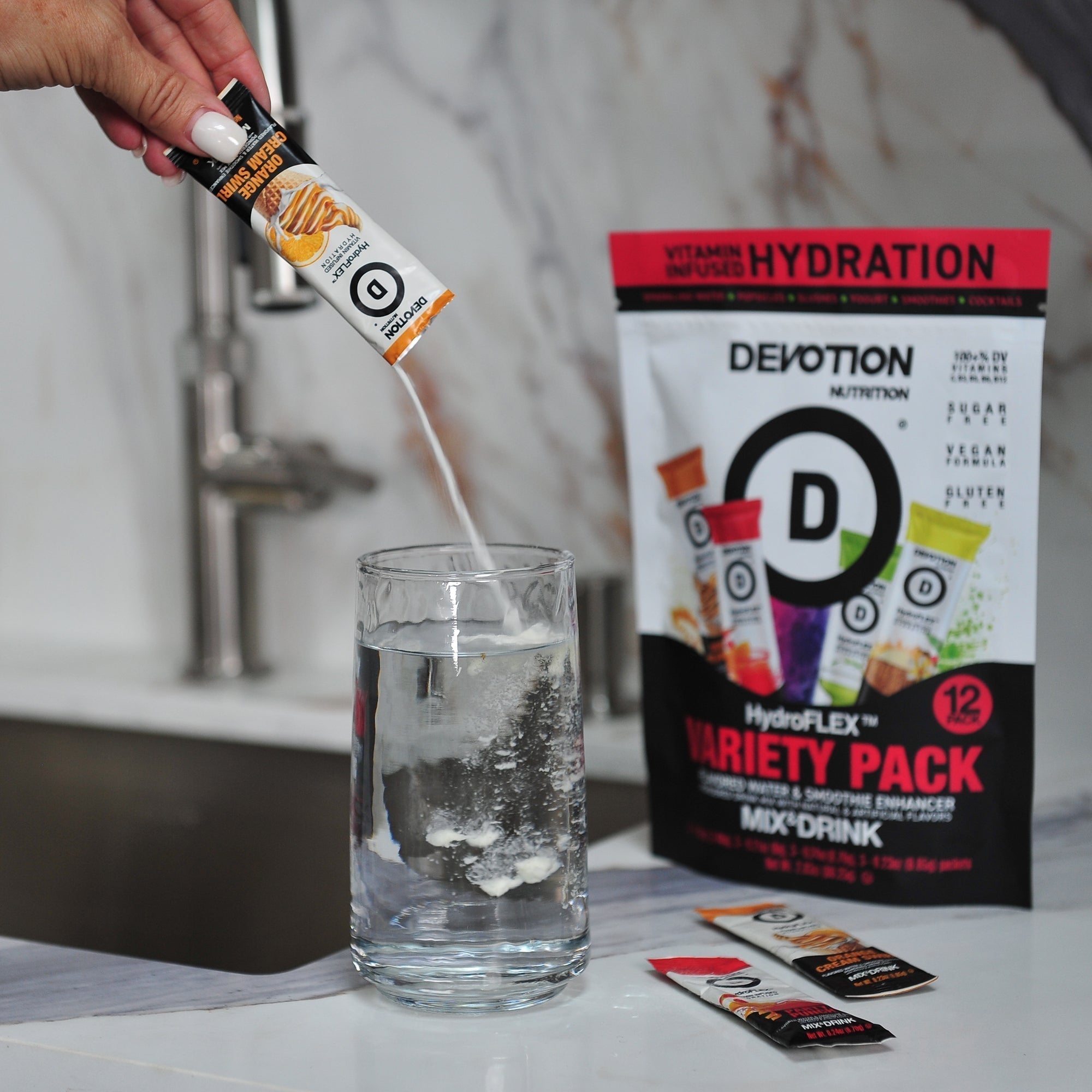
Devotion Nutrition HydroFLEX removes the friction. HydroFLEX is a sugar free, vitamin packed water enhancer whose very first ingredient is soluble vegetable fiber from corn, a gentle prebiotic soluble fiber. It mixes completely clear, tastes incredible, and delivers two things your gut needs in a single step: soluble fiber and the water that it requires to work.
For anyone on a GLP-1, that pairing is the whole game. You are hydrating and adding gentle fiber at the same time, without adding food volume to a stomach that cannot handle it. For anyone over 40, it turns the hardest daily habit into the easiest one: just flavor the water you should be drinking anyway.
A simple daily routine looks like this:
• Morning: Drink 32-40 ounces of water combined with 1 Devotion HydroFLEX when you wake up to signal your colon to start the day. Enjoy oats combined with protein for breakfast or have an apple or banana with your morning meal.
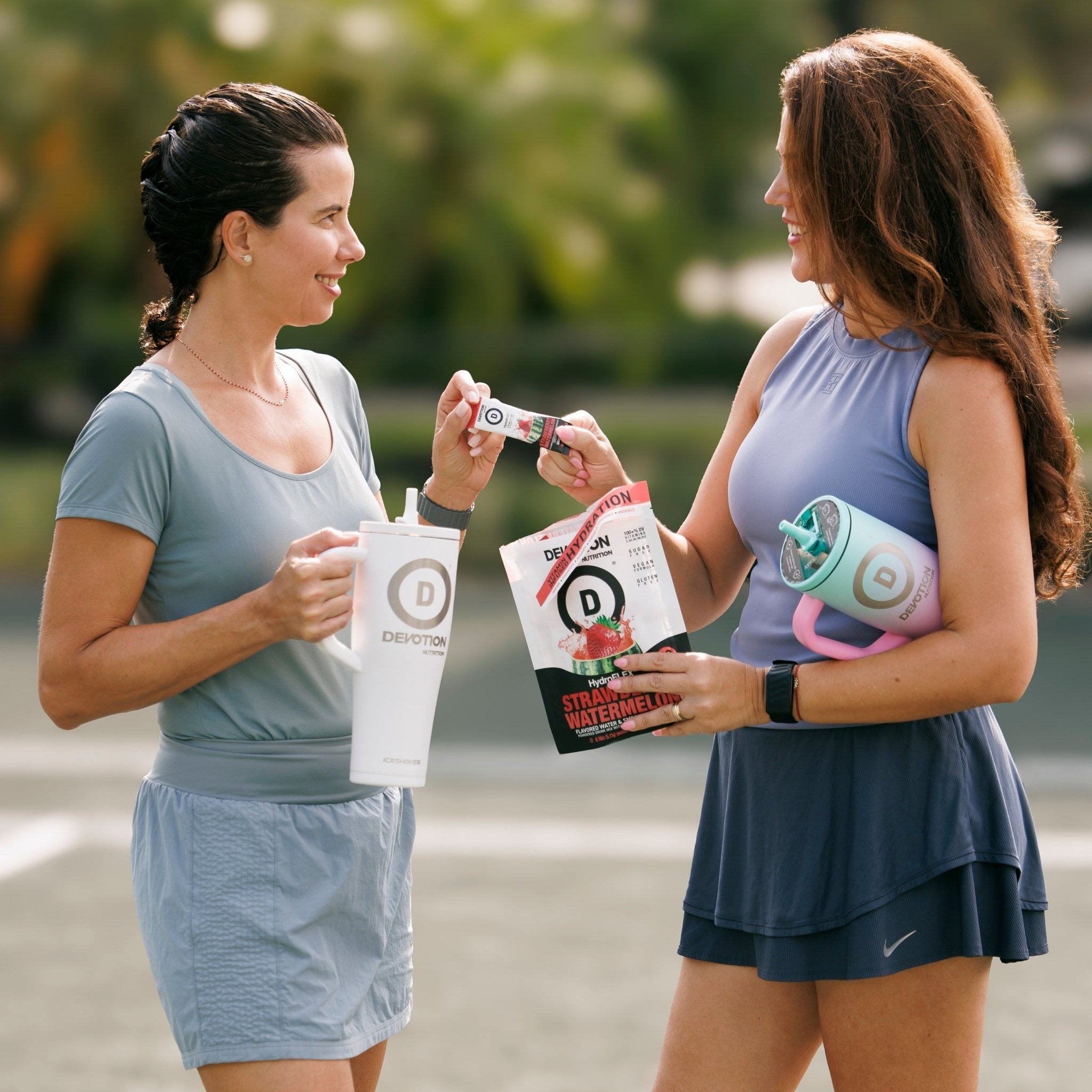
• Midday: Fill a your Ice Shaker with water and HydroFLEX, then sip it slowly over a few hours. This delivers a steady stream of hydration and prebiotic fiber without overwhelming your stomach. You can also add more veggies and beans to your lunch.
• Evening: Take a 15 minute walk after dinner to help stimulate digestion before you wind down for the night.
Remember, HydroFLEX adds to your fiber intake, it does not replace whole foods. Fruits, vegetables, beans, and whole grains supply the insoluble fiber, vitamins, and antioxidants your body also needs. Think of HydroFLEX as the tool that fills the daily gap and keeps you consistent.
Frequently Asked Questions
What is the difference between soluble and insoluble fiber?
Soluble fiber dissolves in water and forms a gel that softens stool, supports healthy cholesterol and blood sugar levels, and feeds good gut bacteria. Insoluble fiber does not dissolve. It adds bulk and helps move food and waste through your digestive tract. You need both types every day.
Why is fiber so important on a GLP-1 medication?
GLP-1 medications slow digestion and shrink appetite, so fiber intake drops while waste moves more slowly through the colon. Daily soluble fiber plus plenty of water keeps stool soft and keeps things moving, without relying on harsh laxatives.
What type of fiber is in HydroFLEX?
HydroFLEX contains soluble vegetable fiber from corn, also called soluble corn fiber. It is a prebiotic soluble fiber that dissolves clear in water, is gentle on the stomach, and feeds the beneficial bacteria in your gut.
Does HydroFLEX replace fiber from fruits and vegetables?
No. HydroFLEX is a convenient way to boost your daily soluble fiber, but whole foods provide insoluble fiber plus nutrients a supplement cannot. Use it alongside a balanced diet, not in place of one.
Sources
- Mayo Clinic: Dietary fiber, essential for a healthy diet
- Mayo Clinic: Probiotics and prebiotics guide
- National Library of Medicine: Soluble corn fiber tolerance and gut health
- PepsiCo Health and Nutrition Sciences: Prebiotic soluble corn fiber and digestive health
- APAOG: Soluble corn fiber may improve women's bone health